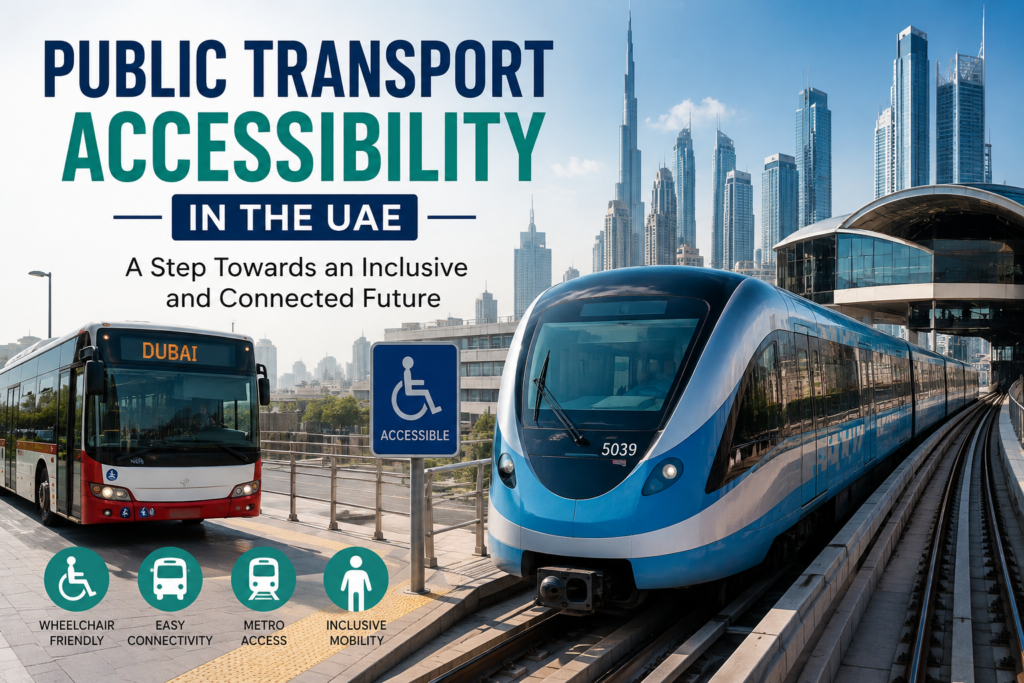
Getting from one place to another shouldn’t be a struggle. Yet elderly passengers still climb high steps. Parents still juggle strollers at crowded doors. People with limited mobility still fight to board on time. Reliable public transport services in the UAE solve these everyday problems. As the UAE grows into one of the world’s most connected regions, transport providers must shift their focus. They can’t just move people — they need to move everyone, comfortably.
Why Accessibility Matters More Than Ever
The UAE hosts a truly diverse population. Residents, tourists, students, workers, and families arrive from every corner of the world. This diversity rules out a “one-size-fits-all” approach. A system that serves only the average commuter excludes the people who need it most.
Transport providers can’t treat accessibility as a bonus feature anymore. Every serious operator must build it into the core of their service.
How ICR Raises the Standard
ICR (New Arabian Passengers Transport by Rented Buses LLC) builds accessibility into every part of its fleet — not as an afterthought, but as a design principle.
Ramps and Low-Entry Access ICR equips its buses with ramps and easy-entry points. Passengers no longer need to climb steep stairs. This one design choice transforms the ride for elderly riders, wheelchair users, and parents with strollers.
Priority Seating ICR marks priority seats clearly near the entrance. Passengers who need extra space or support don’t have to navigate to the back of the bus.
Wide Doors and Handrails Wider doorways cut boarding time and reduce crowding. Sturdy handrails run throughout the cabin, so every passenger has something secure to hold — especially during sudden stops or turns.
Trained, Attentive Drivers Technology only goes so far. ICR trains every driver to assist passengers with mobility needs, so help stays just a request away.
Accessibility Meets Technology
Smart systems strengthen inclusive design. ICR’s GPS-enabled fleet lets riders track live bus locations and check estimated arrival times through a simple mobile app. Passengers who need extra time to reach a pickup point — or who plan around mobility aids — know exactly when their bus will arrive. That certainty removes everyday stress.
Who Benefits From an Accessible Fleet?
- Elderly commuters get a stable, low-effort boarding experience
- Parents and caregivers travel easily with young children or strollers
- People with temporary or permanent mobility limitations board without struggle
- Tourists and visitors enjoy a predictable, easy ride in an unfamiliar city
- Everyday commuters benefit from smoother, less crowded boarding
Accessibility isn’t a niche concern. It quietly improves the ride for every passenger.
A Wider Commitment to Inclusive Mobility
This focus on accessibility drives ICR’s broader mission across its passenger transportation services in the UAE. The company runs a strong network across the Emirates, employs RTA-certified drivers, maintains a modern and varied fleet, and staffs round-the-clock support. Inclusive design adds one more layer to that commitment — it makes the network not just wide-reaching, but genuinely usable for everyone within it.
Final Thoughts
UAE cities keep expanding, and daily commutes now shape life for millions. Accessible transport has become essential infrastructure, not an optional extra. ICR proves that inclusivity and efficiency work together — smart design choices can make a transport network fast, reliable, and welcoming to every kind of passenger at the same time.
Want a passenger transport partner that puts accessibility first? Contact ICR and build a service plan around your riders’ needs.